The Hall Stand and the Work of a Country Entrance
A hall stand can make a country entrance easier to use without turning it into a display. Choose one that suits your space, coats, boots, and daily habits.
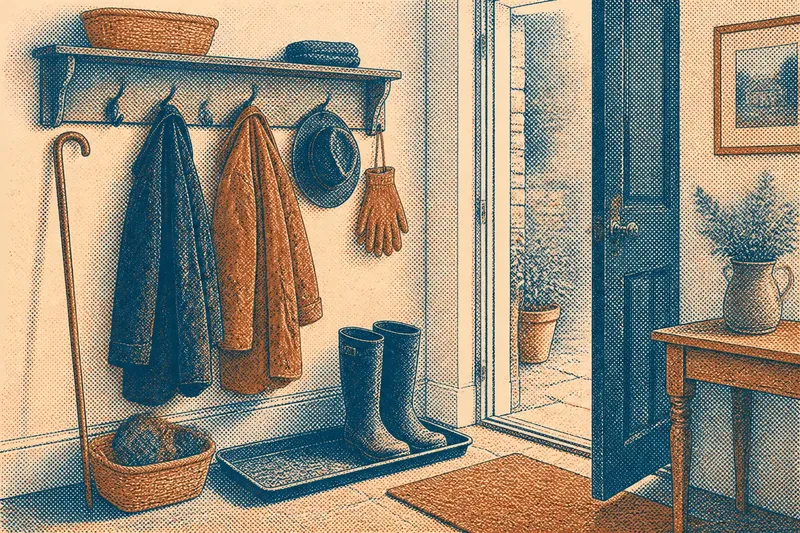
A hall stand works best when it gives the things carried through a country entrance a clear place to land. It can hold a coat, walking stick, hat, or garden basket, but its useful shape depends on what your household brings in and where the door opens.
There is no single history or standard form that explains every hall stand. The name describes a practical kind of furniture whose details vary: some pieces have hooks and a shelf, while others add a mirror, bench, drawer, or space for umbrellas. It is safer to judge the object by those visible functions than to assume that every home arrived at the same arrangement in the same way.
What does a hall stand need to do?
Start with the entrance’s recurring tasks. A stand might keep coats off a chair, collect gloves before they disappear into the house, or give wet boots a place away from the main floor. It should make those tasks easier without blocking the door or narrowing the route through the passage.
Different forms solve different problems. A freestanding stand can combine hooks and a lower shelf; a wall rail leaves more floor clear; a stand with a bench gives someone a place to sit while removing boots. A mirror or drawer is useful only if it serves a routine that already exists.
Which hall stand suits your entrance?
Look at what arrives at the door, what needs to dry, and where people pause. Use each observation to choose a form or decide that a simpler arrangement will do.
- Check the door swing: If a freestanding stand would enter the door’s path, choose a shallow wall rail or move the storage to another wall; otherwise, consider a floor stand that leaves the opening clear.
- Check the available floor space: If people need to pass one another or carry baskets through, favor wall-mounted hooks and a separate mat; if the route remains open, a stand with a lower shelf may fit.
- Check how many coats arrive together: If sleeves crowd the hooks, choose a longer rail or divide coats between the stand and a nearby closet; if the hooks stay clear, keep the smaller piece.
- Check whether wet clothing needs air: If damp coats hang tightly together, choose more open spacing or use a separate drying area; if they can hang apart, the existing hooks may be enough.
- Check where muddy footwear collects: If boots sit on the walking route, add a boot tray or open lower shelf; if footwear already has a suitable place, do not add storage that will gather unrelated items.
- Check who needs to reach the hooks: If children cannot reach their everyday coats, add lower hooks or a basket at their height; if everyone can reach comfortably, avoid extra hooks that invite clutter.
- Check whether anyone sits to remove boots: If balancing is awkward, consider a small bench or nearby chair; if the passage is too narrow for a seat, keep the floor clear and use a stable place elsewhere.
Imagine a household whose entrance has a door that swings close to one wall, two damp coats, garden gloves, and muddy boots. The starting point is a crowded passage with no clear place for footwear. First, the household checks the door swing and sees that a deep freestanding stand would obstruct it. Next, it chooses a shallow wall rail with spaced hooks, puts the gloves in a small basket beneath the rail, and sets a boot tray against the wall outside the door’s path. The resulting arrangement keeps coats apart and boots off the route, but it gives up the bench and broad storage a freestanding piece might offer.
Which materials and details deserve attention?
Wood often sits comfortably beside painted trim, old floorboards, or a plain country table. A painted finish can make a sturdy piece blend with the room; stained or bare wood makes the grain more visible. Choose according to the surrounding surfaces and the amount of routine cleaning the finish can tolerate.
Metal hooks can be helpful for frequently handled coats and bags. Check that their shape holds straps and collars without making them difficult to remove. A mirror earns its space if people use it before leaving, but it is not essential to the stand’s basic work.
Inspect joints, stability, and the way the stand meets the floor or wall. A tall piece should remain steady when someone lifts a coat from one side. For wall-mounted furniture, follow the maker’s fixing instructions and get qualified help if the wall or installation presents a concern.
It is not worth adding decorative hooks that cannot hold the household’s coats or a tiny drawer that becomes a catchall. Extra features are useful only when they make a real threshold task easier.
What questions help settle the choice?
Is a freestanding or wall-mounted hall stand better?
A freestanding stand suits an entrance with enough floor space and can combine hooks, shelves, and seating. A wall-mounted rail is a better fit when the doorway is tight or the floor needs to stay clear.
Does a country entrance need a mirror?
No. A mirror helps if people use it on their way out, but it is not necessary for hanging coats or setting down gloves. Leave it out if it crowds the passage or takes space from more useful storage.
How should a hall stand handle wet coats?
Choose open hooks with enough space between garments, and place a washable mat or tray beneath wet footwear. If coats need to dry fully, do not pack them tightly together or treat the stand as a substitute for a suitable drying area.
What belongs on a hall stand?
Keep it to items regularly used at the threshold, such as coats, hats, a walking stick, or a small basket for gloves. Store seasonal equipment and objects that rarely leave the house elsewhere so everyday things remain easy to reach.
How can you tell if the arrangement fits?
Notice what happens during an ordinary departure and return. If hooks stay overloaded, boots spread across the route, or the lower shelf becomes a pile, check whether the piece is too small, poorly placed, or being asked to hold too many kinds of things. The next decision may be to change the stand, move it, or remove items that belong elsewhere.
A hall stand is only one part of the entrance, not a solution for every outdoor task. Keep a dependable place for the things used at the threshold, and let larger or dirtier equipment go to storage suited to it. When choosing a hall stand for a country entrance, leave enough clear floor to carry a basket through without turning sideways; that small allowance often matters more than another hook.