The Myth of the Matching Room
A matching room can feel flat even when every piece is useful. Learn how to loosen a furniture suite with thoughtful placement and a few personal details.
A matching furniture suite can make a room feel settled, but it does not have to dictate the room’s character. The simplest way to loosen the effect is often to change what surrounds the set: its placement, the objects nearby, and the stories the room lets you see.
What does a furniture suite ask of the room?
A bedroom suite or living room set arrives with its own visual rhythm. The pieces repeat a shape, finish, or fabric, so they already look like a group. That can be useful: the room has a clear starting point, and the furnishings are easy to arrange as a unit.
The drawback is not that the pieces match. It is that a room can begin to feel as if it has no history beyond the purchase. Changing the arrangement and adding objects with a personal purpose can make the suite feel like part of a home rather than a complete room in a box.
Can rearranging make a set feel more personal?
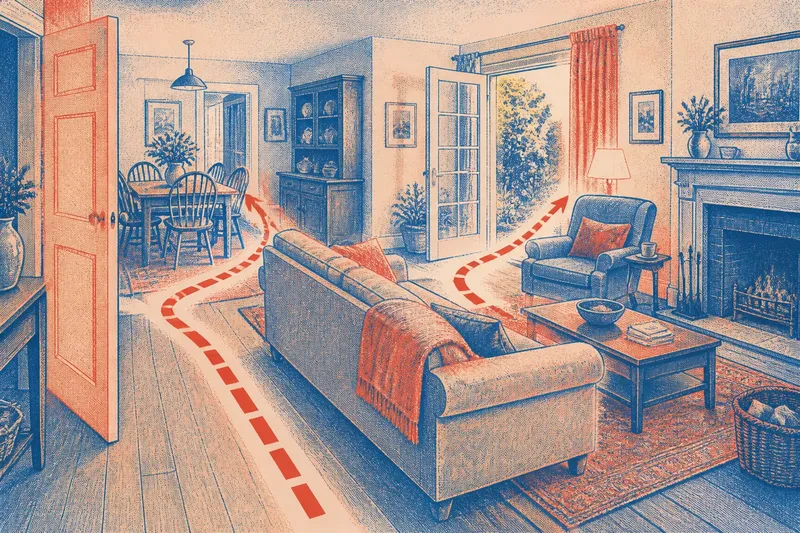
Start by testing the arrangement before buying anything. Move a nightstand slightly away from the bed, place a chair where it can serve a real purpose, or shift a sofa so it faces a window or fireplace rather than lining up with the rest of the set. Keep clear paths to doors and drawers; a fresh arrangement should still be easy to live with.
Look at the room from the doorway and from the seat you use most. If every piece appears in a neat row, try breaking that line with a small table, lamp, or open space. The change gives the eye a pause without requiring a new furniture style.
Which personal details belong beside a matching set?
Choose additions for their use or meaning, not simply because they differ from the suite. A reading chair that is comfortable, a framed family photograph, a bowl used for keys, or a basket that holds knitting can make a room feel inhabited. One or two well-placed objects usually say more than a display assembled to prove the room is eclectic.
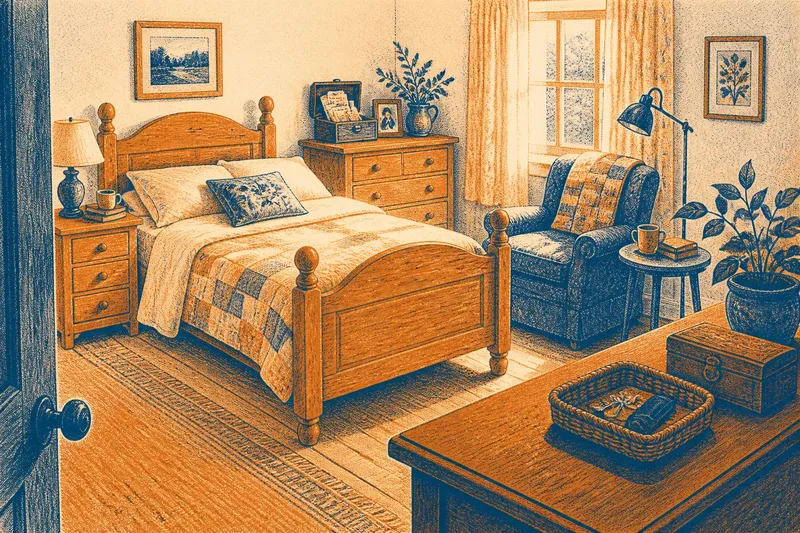
Say you have a matching pine bedroom suite and a stack of family letters you want to keep close. Put the letters in a small lidded box on the dresser, move a well-loved chair near the window, and use a lamp you already own on the nightstand. The expected result is a room where the suite remains visible but the arrangement reflects how you use and remember the space.
What can you change without replacing furniture?
- Check the sightline: If the bed, dresser, and nightstands form one uninterrupted block from the doorway, then shift one small piece or leave a deliberate gap; if the room’s narrow shape prevents that, keep the arrangement and add interest at a different height.
- Check how you use the room: If a chair or table has no practical role, then move it to a place where it serves one; if it still obstructs a path, remove it rather than keeping it as decoration.
- Check the lighting: If the room relies on one central fixture, then add a lamp where you read or dress; if additional light would make the room feel crowded, reposition the existing lamp to serve that task.
- Check the surfaces: If every tabletop is covered with small ornaments, then clear one surface and keep only the items used or valued there; if a surface is already useful and uncluttered, leave it alone.
- Check what feels personal: If the room displays nothing connected to your life, then choose one photograph, book, or keepsake to place where you will notice it; if a meaningful object is already prominent, do not add another merely for variety.
- Check the walking route: If a new arrangement narrows the route to a door, drawer, or window, then move the obstructing piece back; if the route stays clear, keep the arrangement and live with it before making another change.
What questions come up after the furniture is in place?
Should every piece in a matching bedroom set stay together?
No. Keep the pieces that serve the room, and move or store any that make it harder to use. A dresser can work in another room if the bedroom needs more open floor space.
How do you make a matching living room feel less formal?
Give the furniture an everyday purpose and arrange it around conversation, reading, or a view. A basket for blankets or a lamp near a favorite seat can make the room feel ready to use rather than staged.
What if there is no space for an extra chair or table?
Do not force another furnishing into the room. A changed arrangement, a useful object on an existing surface, or a personal photograph can add character without taking up floor space.
Is it worth replacing a whole set that still works?
Usually not for the sake of variety alone. Keep sound, useful pieces and change the arrangement or the supporting objects first; consider replacement only when a piece no longer suits the room’s needs.
How can the room change at its own pace?
Make one adjustment, then use the room for a while before deciding what else it needs. If the new arrangement improves a daily routine, it has earned its place. If it creates an awkward path or leaves a useful task unsupported, reverse it and try another position.
The matching room does not need to be dismantled to become personal. Keep the suite’s useful order, then let the room’s arrangement and chosen keepsakes show how you live in it. The most helpful addition may be a cleared surface or a better-placed chair, not another purchase.